§01
On iPhone, and in any browser.
どこでも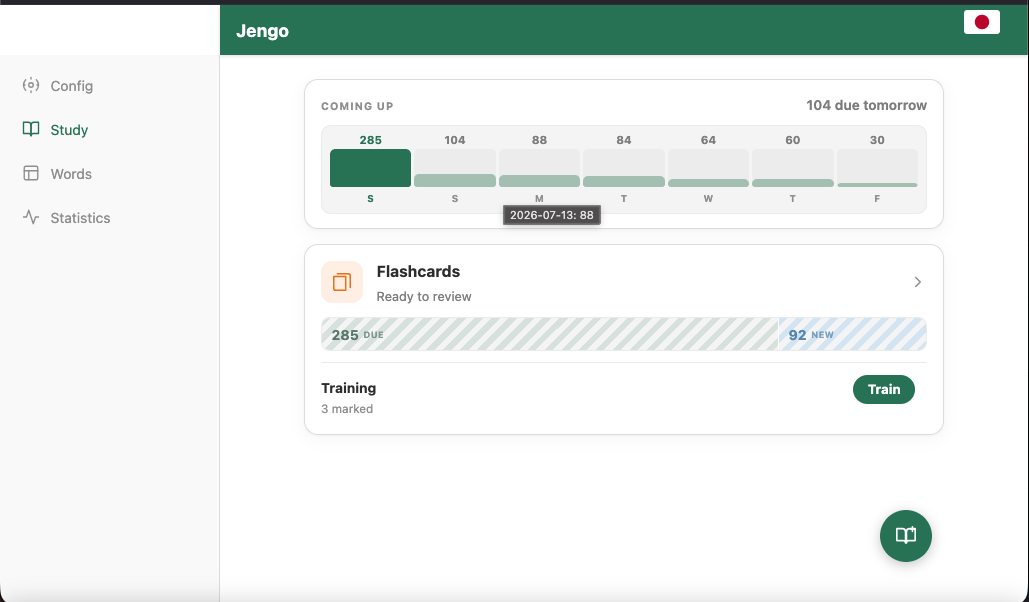
Built for you.
Add to flashcards in a tap
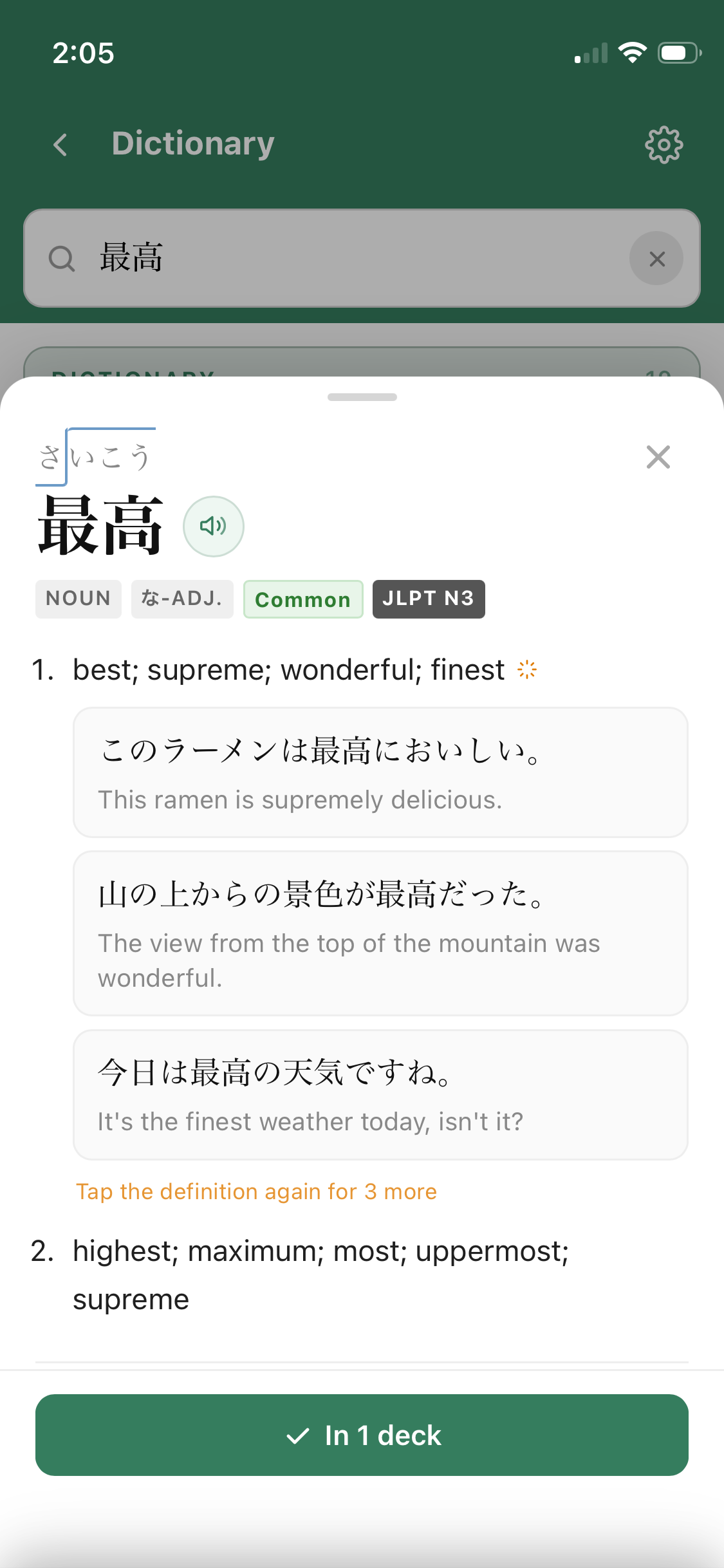
Straight from the dictionary entry, with the reading, audio, and examples attached.
An array of search tools
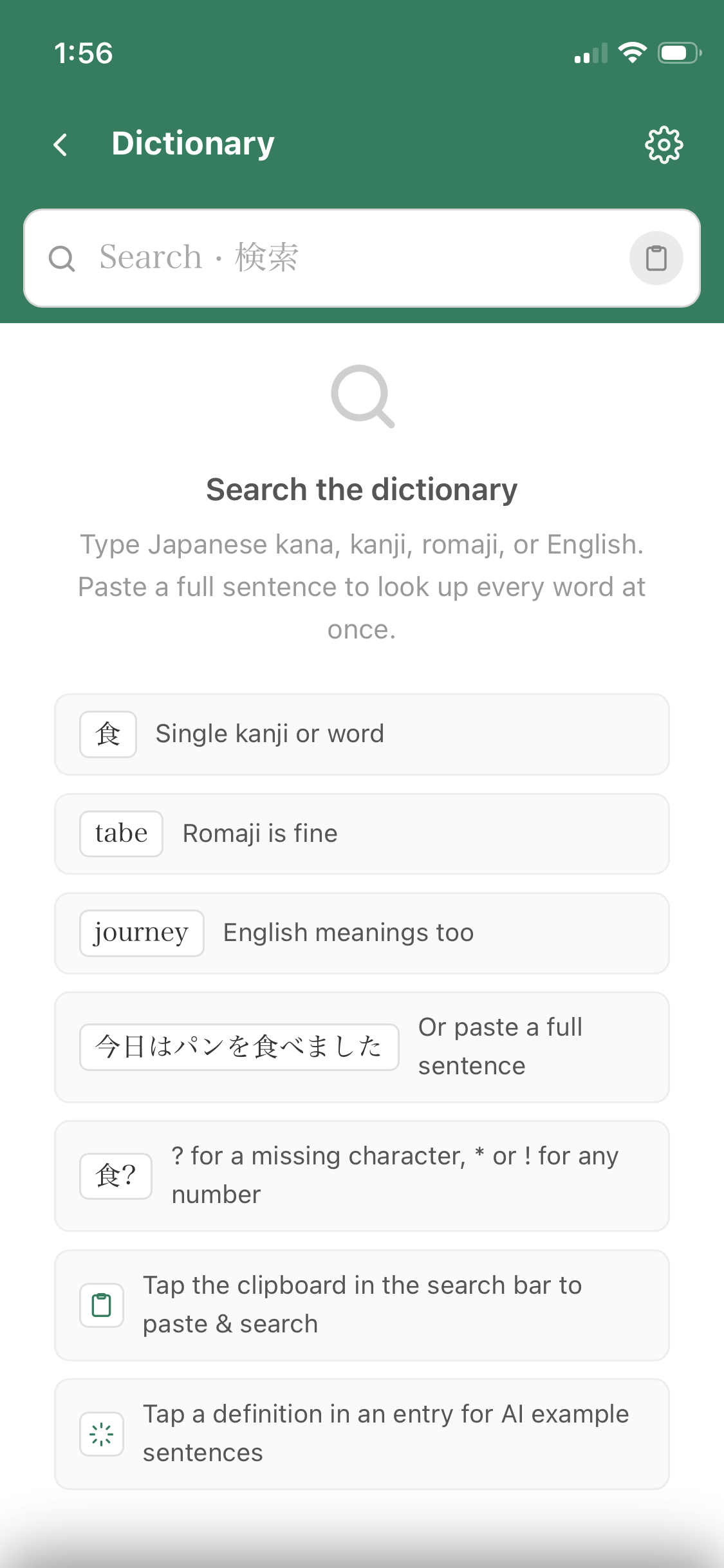
Draw it, or type romaji, kana, kanji, or English. Use wildcards, or paste a whole sentence to look up every word at once.
Works fully offline
The entire dictionary and your decks live on your device. Syncs to the web when you're back online.
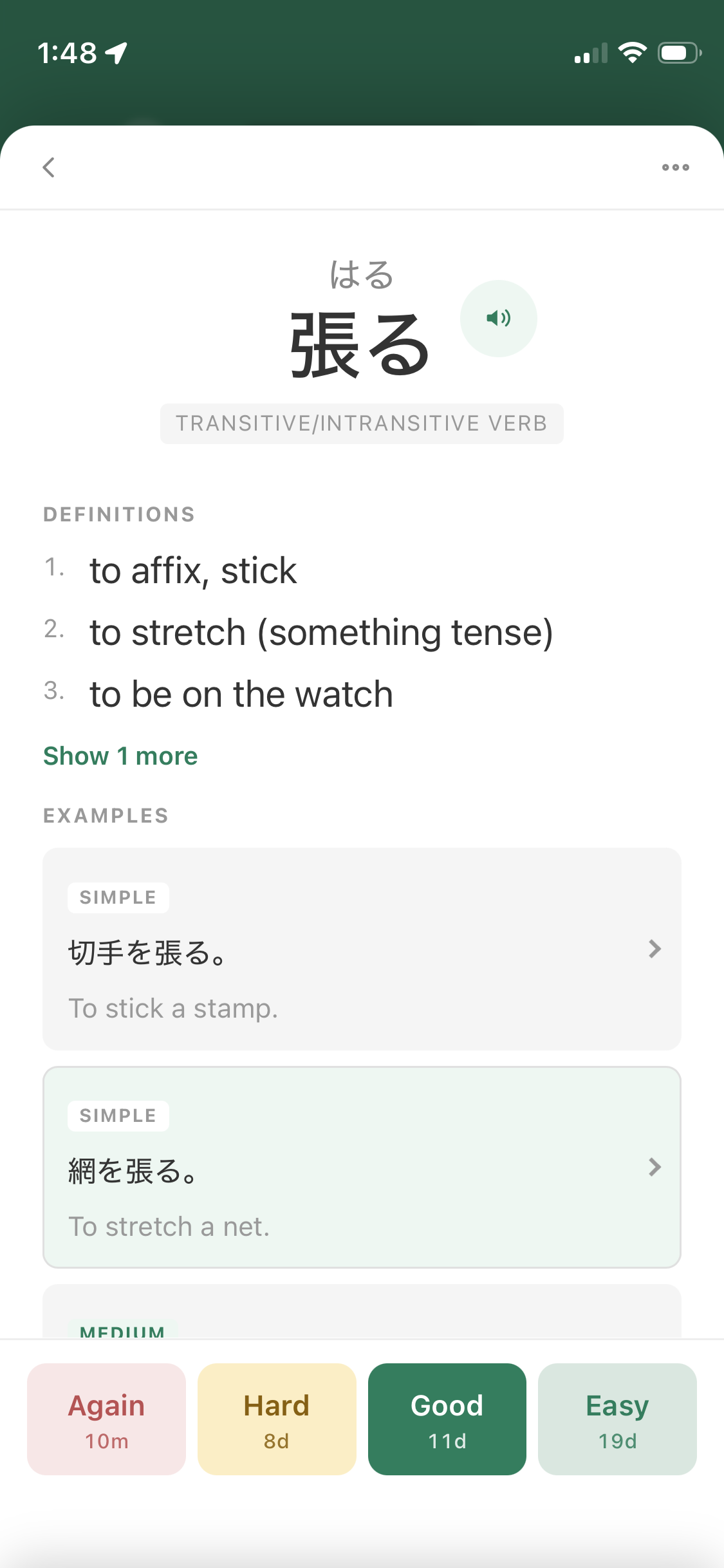
Modern spaced repetition
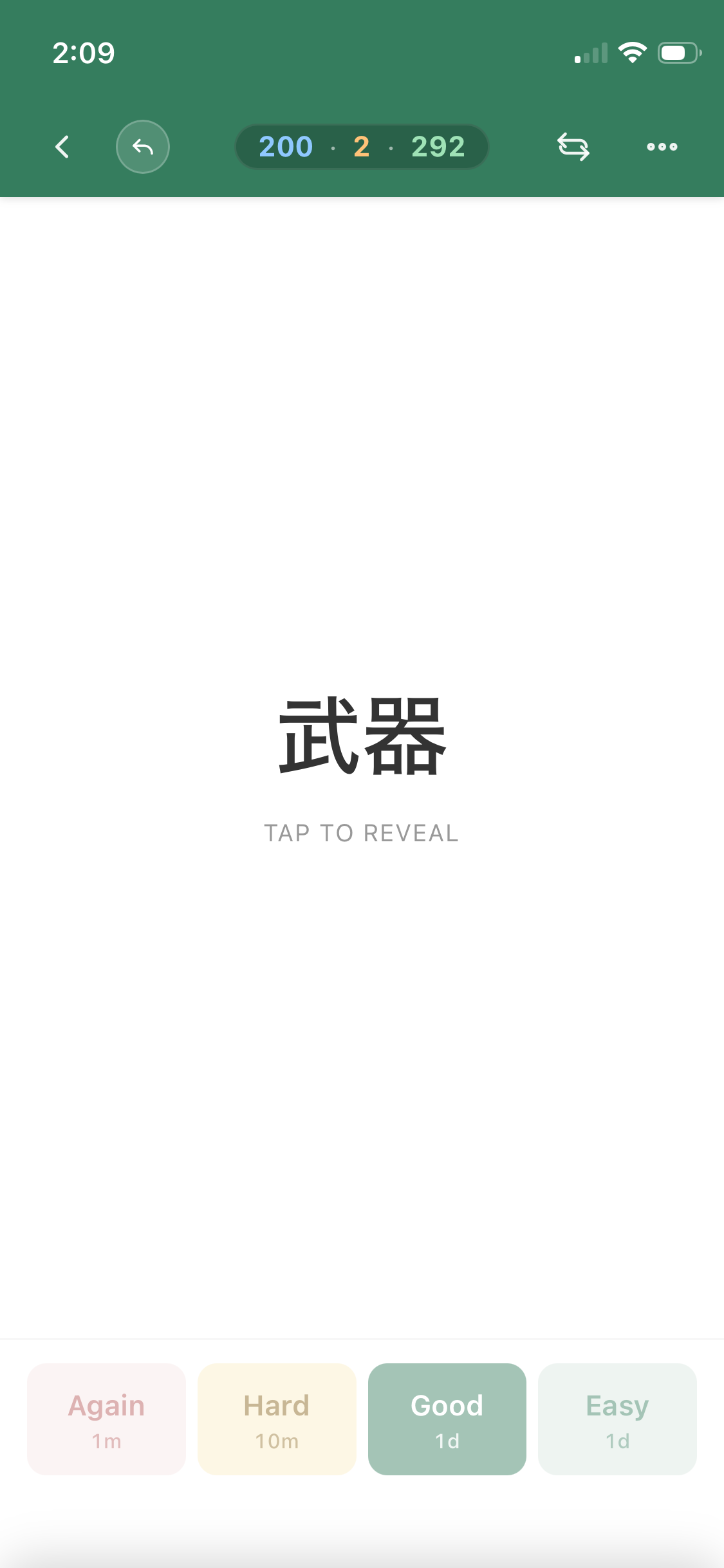
An FSRS scheduler shows each word at the moment you'd forget it. No setup, no fiddling with intervals.
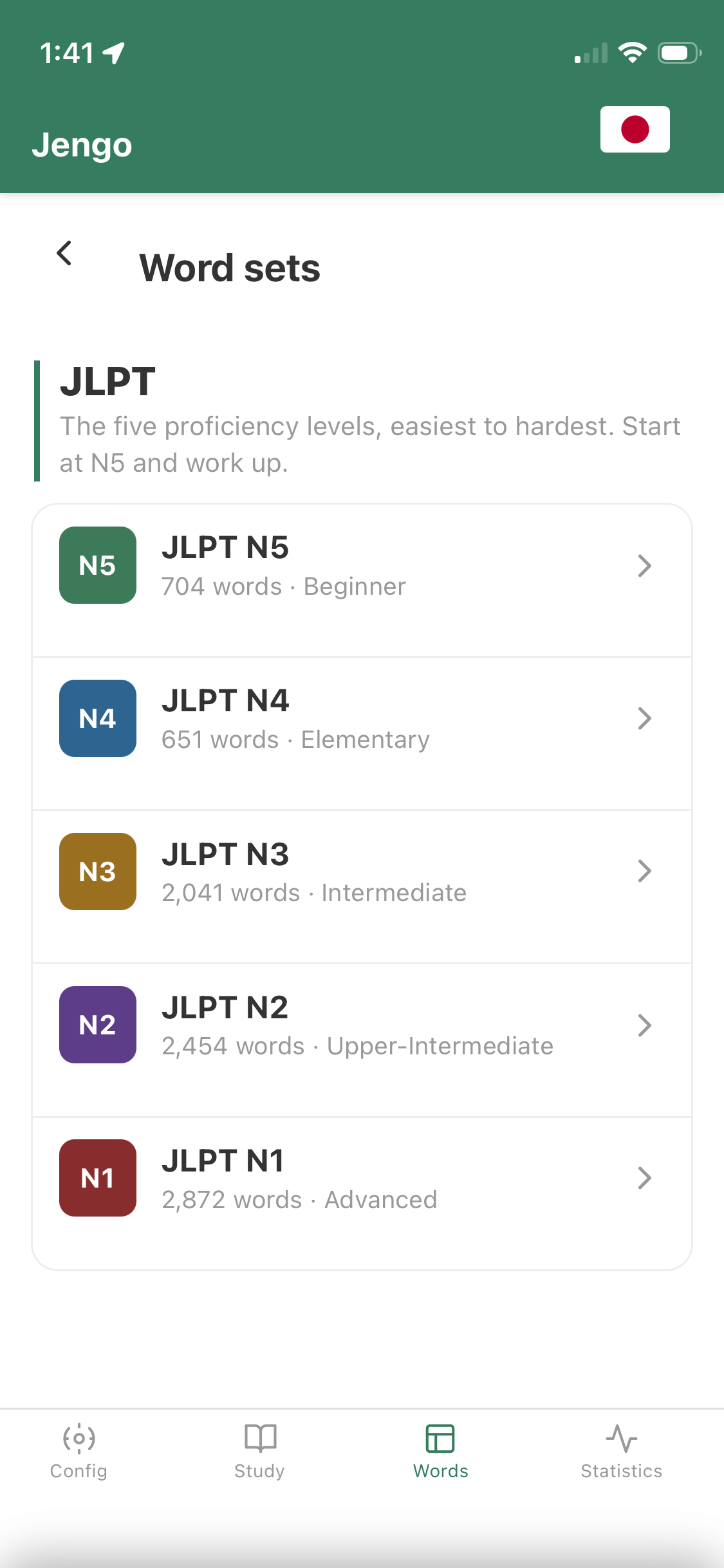
JLPT decks built in
N5 through N1 ready to study — 700 to 2,900 words per level — or import your own list.
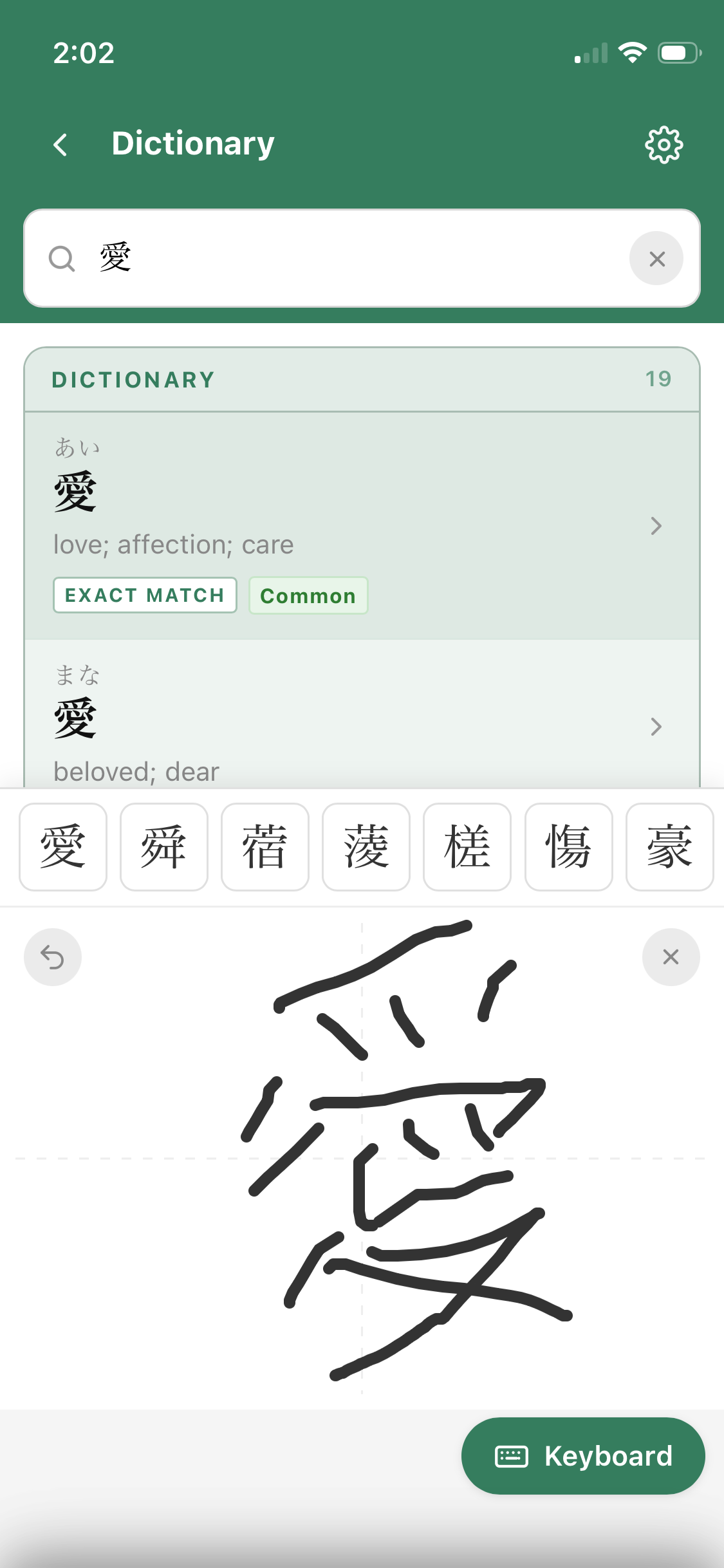
Kanji handwriting search
Can't type a kanji you don't recognize? Draw it and Jengo finds it.
Audio + pitch accent
Hear words and sentences, and see how they actually sound.
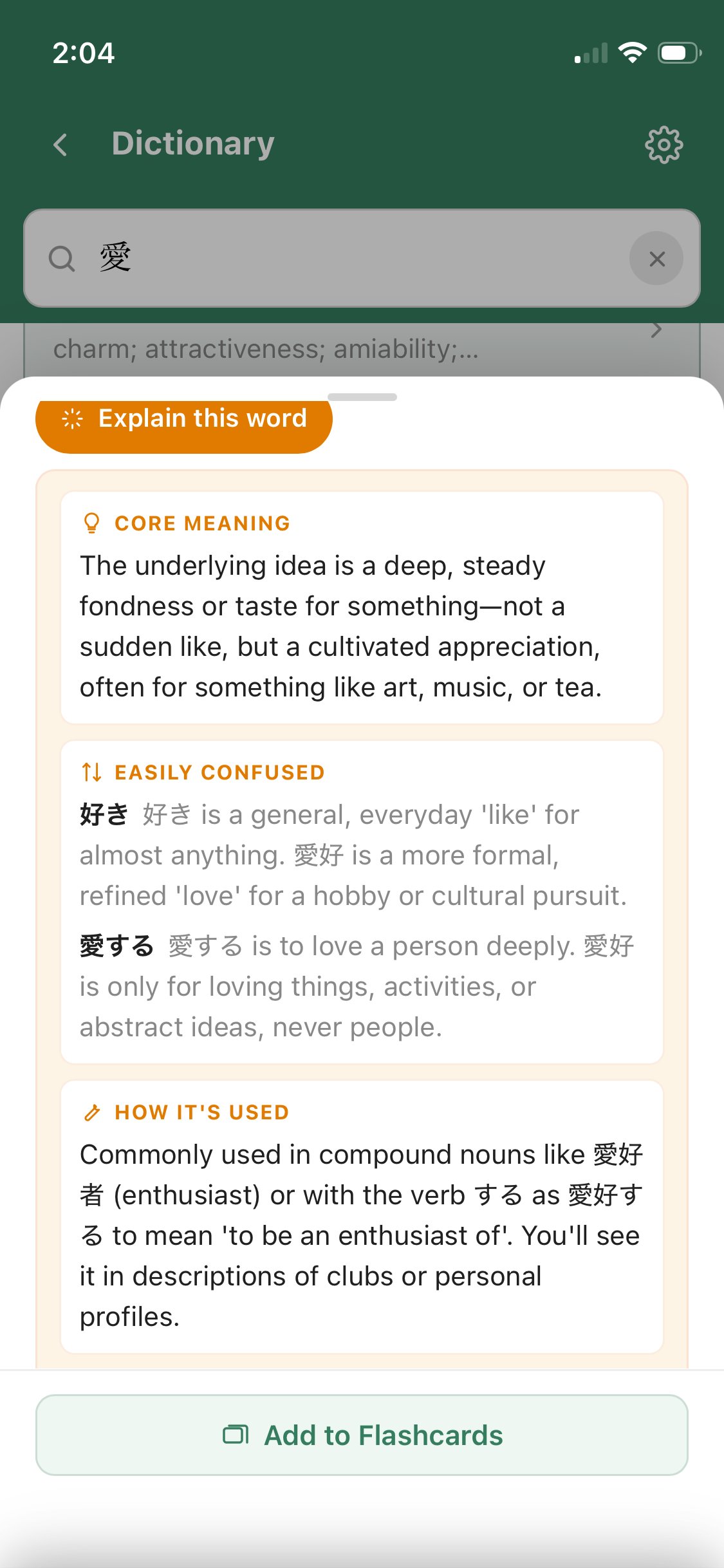
Plain-English explanations
A word's core meaning, the words it's confused with, and how it's actually used — generated on demand.
On-demand example sentences
Pull fresh examples for any definition whenever you want more context.
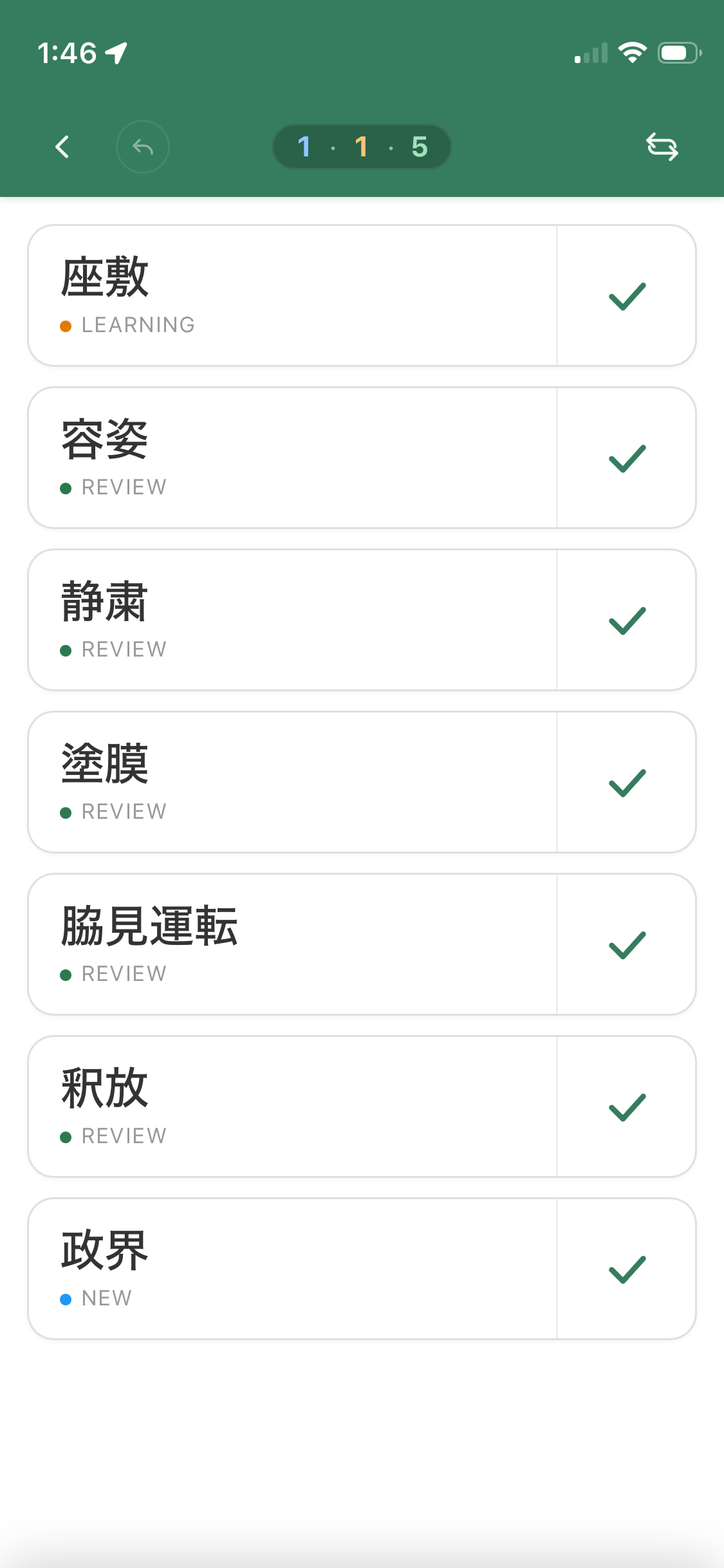
Multi-card review
Clear the words you already know fast instead of flipping them one at a time.
Make it yours
Build your own cards quickly, tag decks with colored icons, and auto-enhance lower-quality cards.
— and let Jengo do it for you.
I lived in Japan for two years, read grammar dictionaries cover to cover, worked through dozens of books and hundreds of podcasts, spent three hours a day on flashcards and four hours speaking with natives, and “learned” more than 15,000 words. I did everything right.
But I knew there had to be a better way. Jengo is the tool I always wanted, but never had.
— JengoDev

Does Jengo work offline?
Yes. The full dictionary and all your decks live on your device. It syncs to the web when you're back online.
What platforms is it on?
iPhone and any web browser today, with your words synced between them.
Can I look up a kanji I can't type?
Yes — draw it with handwriting search, or search by reading, romaji, or English meaning.
Does it have JLPT vocabulary?
Yes — JLPT N5 through N1 decks are built in, and you can import your own word lists.
How is this different from Anki + jisho.org?
It's both in one app. You look a word up and add it to spaced-repetition flashcards in a single tap — cleaner and more intuitive, with no jumping between tools.
What kind of flashcard scheduling does it use?
A modern FSRS scheduler (Free Spaced Repetition Scheduler) that shows each word right before you'd forget it.